 Mon – Fri: 7AM – 7PM | Sat: 8AM – 6PM

At 28°F, a hairline gap can become a place for water to freeze, expand, and work its way farther into the exterior. At Cal Dry Roofing, we look for those small weak spots before a stretch of wet, cold weather turns them into a larger repair. Around Carmel, IN, freeze-thaw cycles can shift materials. They can hold water in the wrong places and pull open edges that looked fine in October. Winter isn’t forgiving.
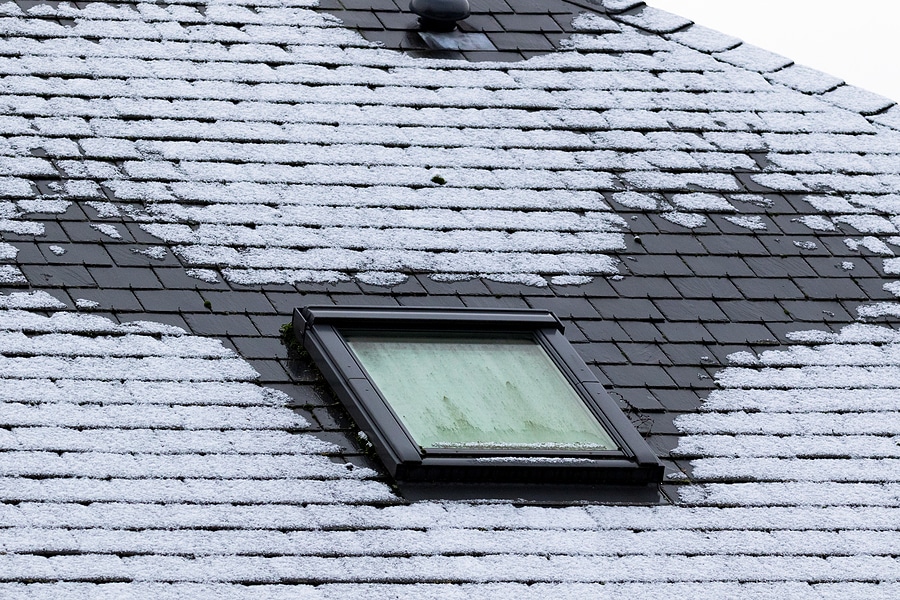
Our Roof Check Starts at the Shingles
An exposed nail head or one curled shingle tab can let melting ice slip beneath the surface. During a roof inspection, we check for lifted, cracked, curling, or missing shingles. Then we follow the signs around flashing, valleys, ridgelines, and roof penetrations. We explain what we find and what it means in plain English.
- Shingle edges: Broken or lifted tabs often show up after materials contract in the cold.
- Flashing details: Metal transitions get a close look, especially where ice can push water through a seam.
- Roofline staining: Discoloration may point to water moving where it should not.
Roofline Checks After Freezing Weather
Brown water marks, soft trim, and a gutter full of frozen debris can all point to trouble at the roofline. We check for blocked drainage, gaps behind exterior materials, and sections that sag under the weight of retained ice. Even a few inches of standing water can leave fascia vulnerable.
A fist-sized clump of leaves can pack tightly inside a gutter after one freeze. During every gutter inspection, our team checks downspouts, end caps, fasteners, and gutter pitch so runoff can move away from the house. Water spilling over a frozen gutter can soak fascia and turn a small issue into a wider repair.
- We clear the view: Debris, standing water, and overflow marks tell part of the story.
- We test alignment: We look for gutter runs that are pulling away from the eaves or sitting at the wrong angle.
- We explain the fix: You’ll hear what we found, where it is, and what work makes sense.
Our Exterior Review Covers Siding, Soffit, and Fascia
A split along one siding seam may look minor from the driveway, but trapped moisture can widen it when temperatures drop overnight. With a siding inspection, we check panels, trim, corners, and joints for warping, loose pieces, and damp areas. We also look for related problems around soffits and fascia. These roof-edge components help protect the home from moisture while supporting proper ventilation.
One loose fascia board or warped siding panel is easier to address before deeper winter weather arrives. Cal Dry Roofing looks at the damage around your home and lays out a clear next step. Call us at (463) 583-1477 or contact us to get started.